
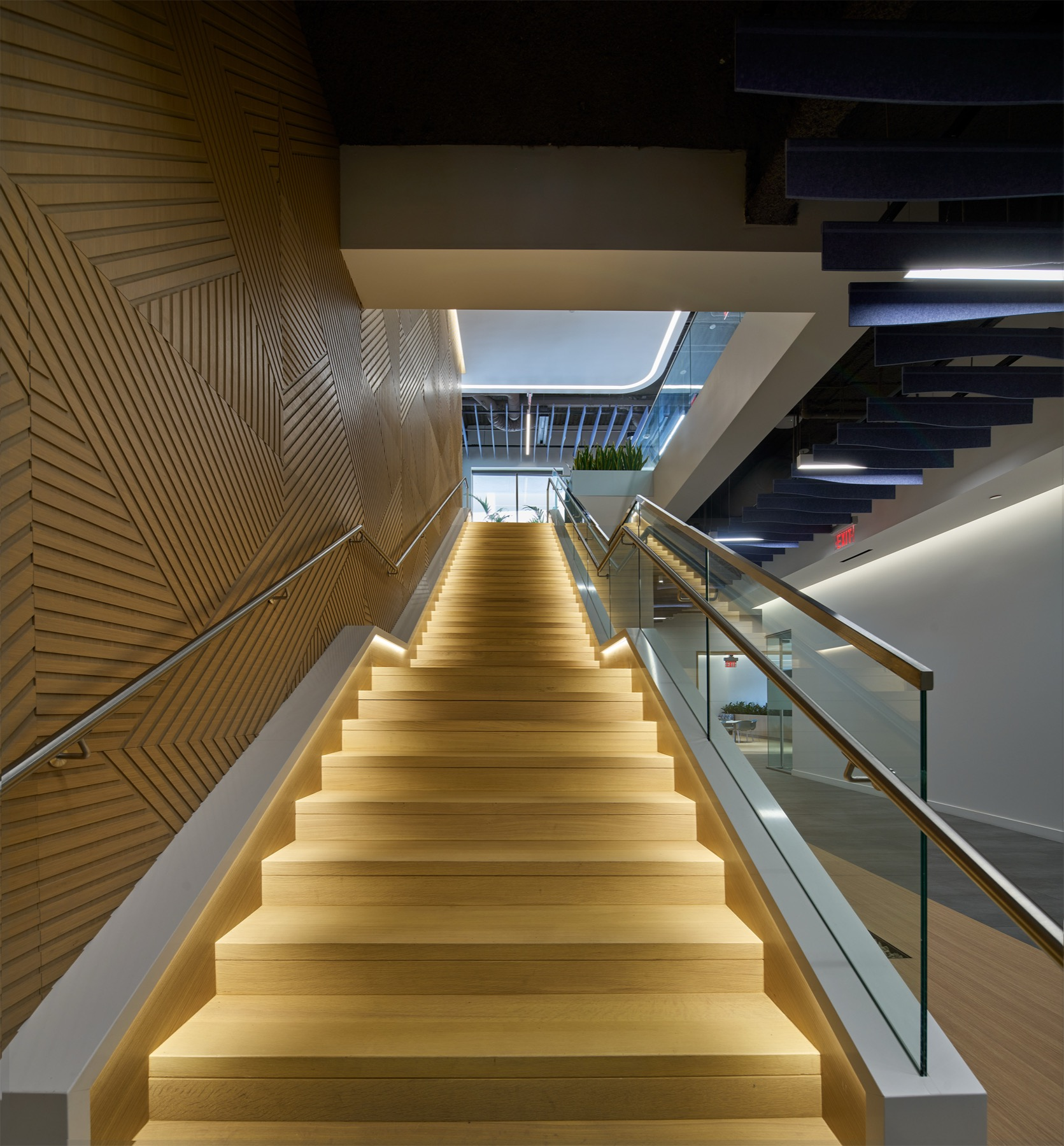

Light is the first language of space—speaking before color, before form, before any conscious design decision registers. It whispers moods into being and orchestrates the silent symphony of human experience within built environments. Far beyond mere visibility, strategic illumination serves as architecture’s most powerful yet invisible force, crafting emotion, supporting wellness, and elevating the human experience.
The Mood-Setting Power of Light
Lighting can dramatically transform how a space feels and functions. From warm tones that create intimate, contemplative settings to cooler hues that sharpen focus and energize collaboration, light becomes the conductor of emotional experience. Thoughtfully layered illumination—balancing ambient, task, and accent lighting—helps delineate zones, evoke calmness, or stimulate activity.
At Klawiter, we’ve observed this transformative power across four decades of commercial design. In healthcare environments, we use gentle, warm lighting to reduce patient anxiety while incorporating brighter, more focused illumination in clinical areas. For entertainment venues, we craft dynamic lighting narratives that build anticipation and enhance the guest experience. Office spaces demand a more nuanced approach—supporting concentration during focused work while creating inviting areas for collaboration and respite.

Designers have long known this intuitively, but today, research validates what our instincts tell us: light directly affects psychological well-being, cognitive performance, and even physical health.
Circadian Support: Reconnecting with Natural Rhythms
Modern commercial environments often disconnect occupants from natural daylight, especially in windowless spaces, lower floors, or deep floor plates. This disconnection disrupts our circadian rhythms—the internal biological clock governing sleep, hormone production, alertness, and mood. Without adequate daylight exposure or circadian-aligned artificial lighting, we risk sleep disorders, reduced cognitive function, and mood disorders including depression and Seasonal Affective Disorder.
The WELL Building Standard v2.0 recognizes this critical connection between lighting and wellness, establishing key principles like Circadian Lighting Design and Daylight Design Strategies. These standards require at least 150 Equivalent Melanopic Lux (EML) at work planes for four hours per day—a metric that measures light’s impact on our biological clock rather than simple visual brightness. Premium wellness certifications call for even higher levels, acknowledging that superior lighting design is becoming a competitive advantage in attracting health-conscious tenants and users.
For design professionals, this represents both an opportunity and a responsibility. Lighting that supports circadian health isn’t just good practice—it’s becoming an expectation in high-performance buildings.
Daylight, Virtually Delivered
When natural light isn’t available or sufficient, cutting-edge technology offers compelling solutions. Systems like Artificial Sky’s biodynamic lighting platforms, including their Virtual Sky and Skylight series, represent a quantum leap in addressing natural light deprivation. Using sophisticated nanotechnology, these systems replicate the Rayleigh Scattering effect that makes our sky appear blue—delivering not just sunlight, but the psychological experience of open sky.

This technology becomes particularly powerful in challenging design scenarios: basement conference rooms, interior medical suites, or deep-plan office spaces where traditional skylights aren’t feasible. The systems dynamically shift in color temperature and intensity from warm 2100K evening tones to bright 7500K midday illumination, automatically aligning with natural daily rhythms.
Design in Motion: Lighting as Experience
The most sophisticated lighting installations transform illumination into experiential design. Artificial Sky’s Virtual Sky includes subtle moving cloud patterns, gradual sunset transitions, and even gentle nighttime scenes—blurring the boundary between real and artificial daylight. This immersive approach proves particularly valuable in specialized environments like memory care facilities, where dynamic lighting can slow cognitive decline and reduce symptoms of dementia and depression.
Equally important is occupant control—another key WELL feature that empowers users to adjust brightness and color temperature to their personal preferences and tasks. This personalization not only improves comfort but reduces common lighting complaints like glare, flicker, or overstimulation that can undermine otherwise excellent design.
The Klawiter Approach: Balancing Art and Science
Our lighting design philosophy centers on the belief that exceptional illumination should feel both intentional and effortless. We begin every project by understanding the human story: Who will use this space? What activities will unfold here? How do we want people to feel when they enter?
From this foundation, we layer technical expertise—understanding color rendering, beam angles, dimming protocols, and energy performance. But the technology serves the experience, never the reverse. Whether designing a corporate headquarters, medical facility, or entertainment venue, we craft lighting that enhances both the architectural vision and human well-being.
Our four decades of experience have taught us that lighting mistakes can undermine even the most sophisticated design. Common pitfalls include over-reliance on overhead fixtures, neglecting transition zones, ignoring the impact of screen glare, and failing to consider how lighting changes throughout the day. Great lighting design anticipates these challenges from the earliest planning stages.
Conclusion: The Invisible Foundation of Great Design
Lighting is no longer just about visibility—it’s about vitality, productivity, and the subtle art of making spaces feel alive. In the hands of informed designers, illumination becomes an instrument to elevate wellness, enhance performance, and create atmospheres that resonate on both conscious and unconscious levels.
At Klawiter, we understand that exceptional lighting design isn’t just about fixtures and lumens—it’s about crafting environments that enhance human potential. By aligning artificial illumination with natural rhythms, architectural intentions, and human preferences, we unlock spaces that feel as good as they look, supporting the people and activities they house.

When done right, lighting becomes one of design’s most impactful and lasting contributions—the invisible foundation upon which great spaces are built.
References: International Well Building Institute — Intro to Well v2™ Q1 2022
References: Artificial Sky — Bring The Outdoors In
Contributors: Light Build Design — Ken Downing, AIA and Stefan Rohrberg
You must be logged in to post a comment.